Portfolio Pédagogique
-
The Black Politics of Michael Jackson
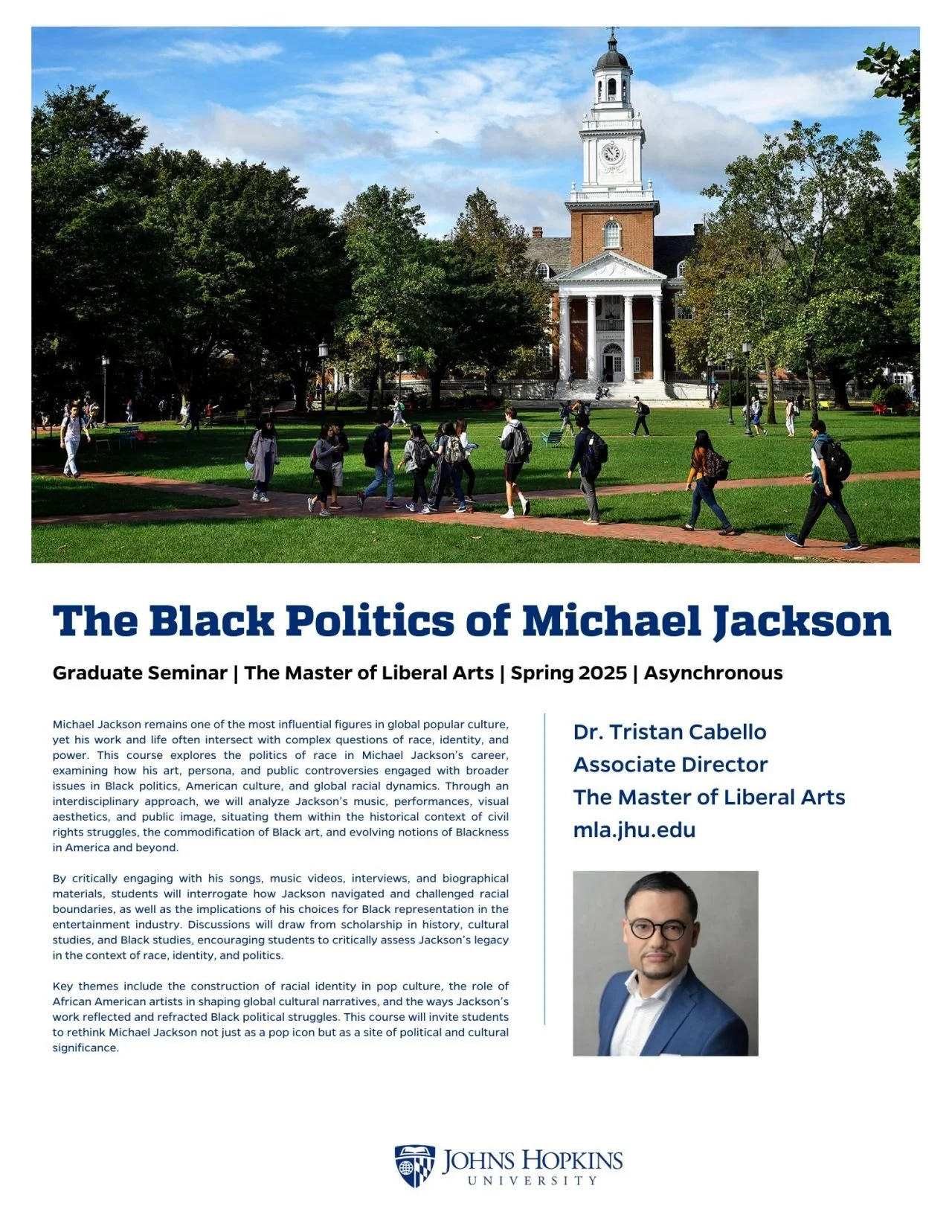
This course explores the political, racial, and cultural legacy of Michael Jackson as one of the most iconic and controversial figures in American popular culture. Far beyond biography or fan culture, the course interrogates how Jackson’s body, music, and public persona intersect with Black identity, racial capitalism, gender performance, and global power. Students engage with critical theory, Black studies, and media analysis to examine Jackson’s role in shaping conversations around race, respectability, and resistance from the 1980s to today. Through close readings of performances, interviews, music videos, and scholarship, the course asks: What does it mean to be a Black global superstar in a society structured by anti-Blackness? And how do we reconcile cultural influence with structural power?
-
What is History?
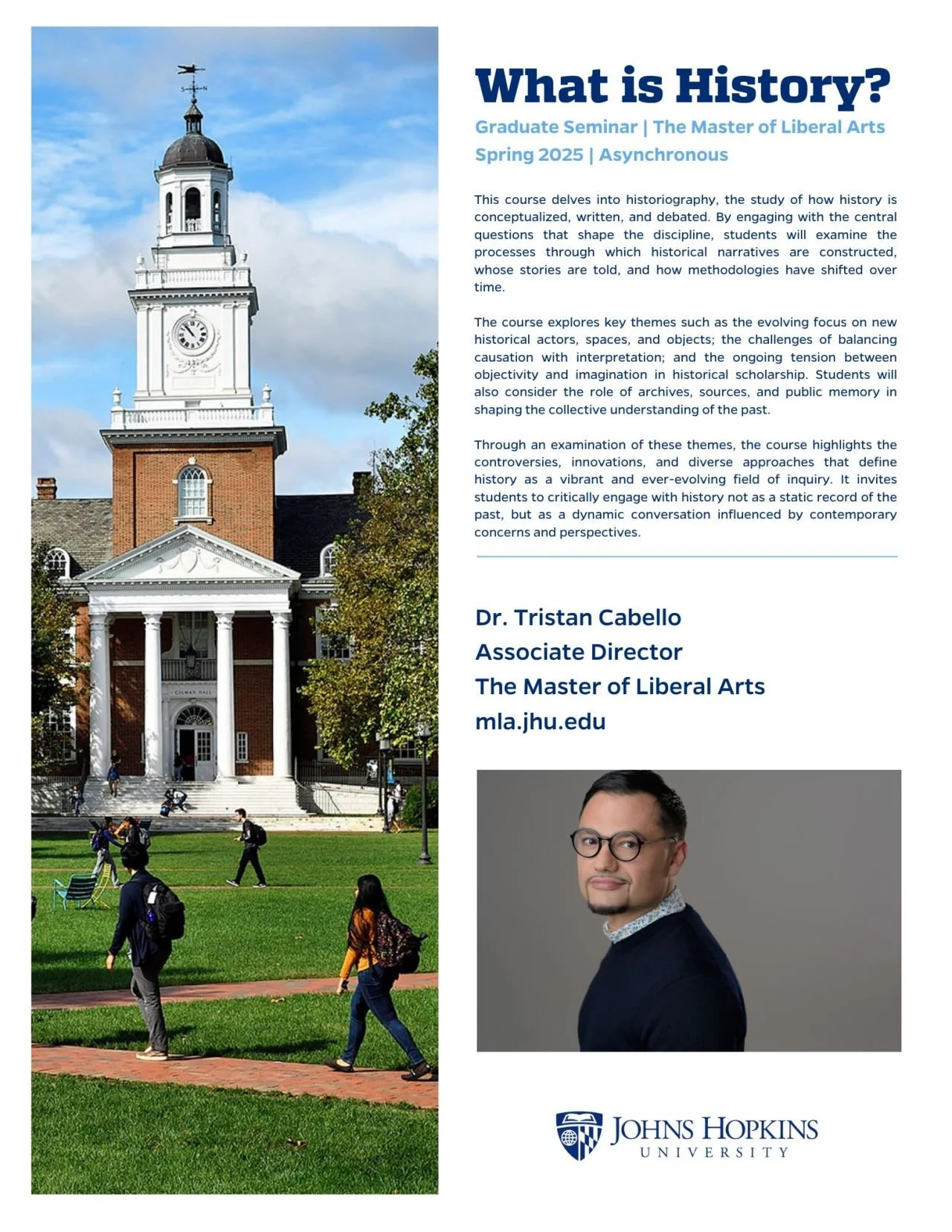
Grounded in the work Thinking About History by Sarah Maza, this course invites students to reflect critically on the nature, purpose, and politics of historical inquiry. Rather than treating history as a fixed narrative, the course examines how historians construct meaning, choose sources, and engage with power through their interpretations. Students explore key debates around objectivity, memory, narrative, evidence, and historical responsibility, while considering how race, class, gender, and empire shape the discipline. By the end of the course, students not only understand how history is written—but also why it matters who gets to write it.
-

Critical Theory
This course explores the intellectual traditions that challenge dominant ideologies, expose systems of power, and imagine emancipatory alternatives. Drawing from the Frankfurt School, poststructuralism, feminist theory, postcolonial critique, and Black radical thought, students engage with foundational texts by thinkers such as Adorno, Foucault, Fanon, Butler, and hooks. The course emphasizes how critical theory equips scholars to question what is often taken for granted—norms around knowledge, identity, culture, and authority. Through weekly discussions and written reflections, students interrogate how theory can serve as both a tool of resistance and a method for reimagining the world.
-
Black Queer History
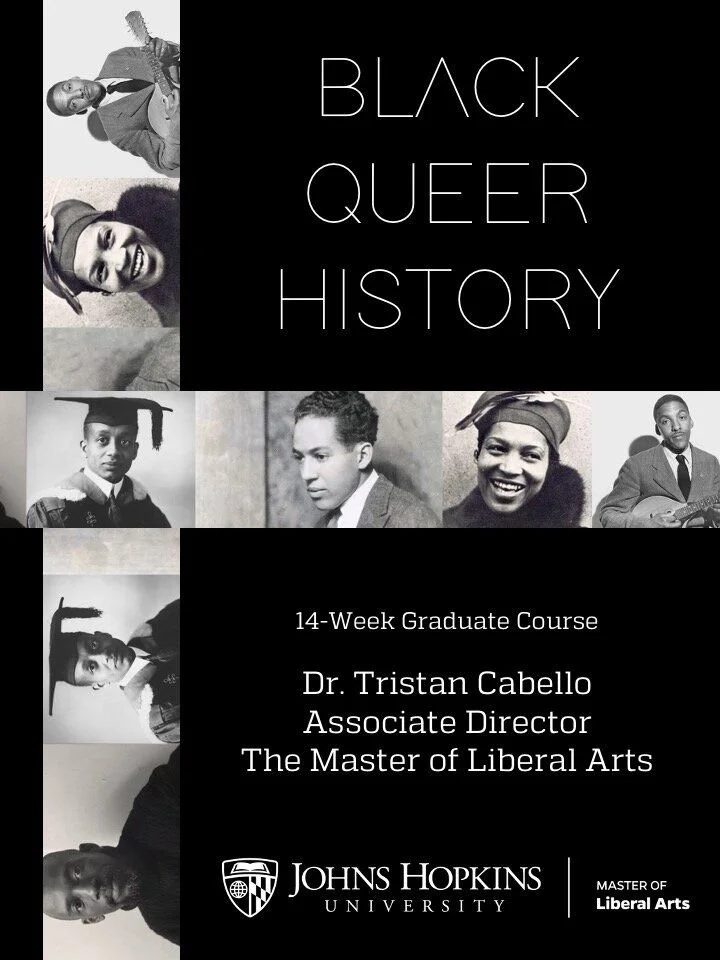
This course centers the lives, struggles, and cultural production of Black queer people in the United States, tracing how their histories have been erased, marginalized, and reclaimed. Drawing on scholarship, archival materials, memoir, performance, and film, the course explores the intersections of race, gender, sexuality, class, and resistance. Students examine key figures and movements—from the Harlem Renaissance to the Ballroom scene, from the AIDS crisis to contemporary Black queer activism—while grappling with the politics of visibility, respectability, and liberation. The course asks: What does it mean to write Black queer history? Who gets remembered, and how? And how do Black queer lives reshape our understanding of history itself?
-
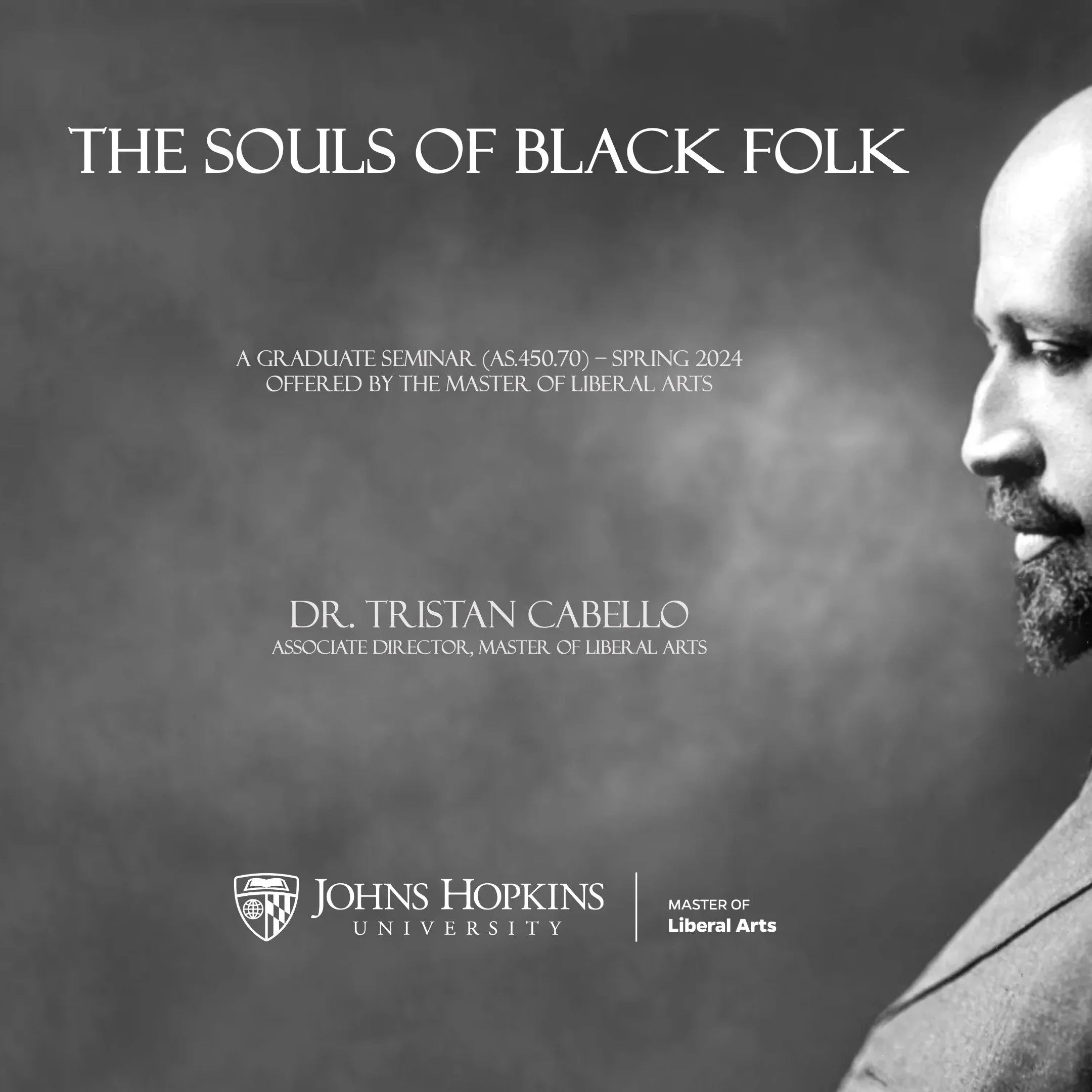
The Soul of Black Folks
Anchored in W. E. B. Du Bois’s 1903 masterpiece, this course explores the enduring impact of The Souls of Black Folk as both a historical text and a radical lens for understanding race, power, and identity in the United States. Students examine Du Bois’s key concepts—double consciousness, the color line, the veil—not just as theoretical ideas, but as lived experiences shaped by white supremacy, capitalism, and the afterlives of slavery. Through interdisciplinary readings in history, sociology, literature, and Black studies, the course situates Du Bois within a broader Black intellectual tradition while also considering how his work resonates in the present. We ask: How does Du Bois help us read the 20th century—and the 21st—not just as a series of events, but as a moral and political struggle for Black humanity?
-
Research Methods
Designed for students in the Master of Liberal Arts program, the course provides a rigorous foundation in the theories, tools, and ethics of interdisciplinary scholarship. It encourages students to move beyond disciplinary boundaries and think critically about how knowledge is produced, who produces it, and to what ends. Drawing on history, sociology, literature, political theory, and cultural studies, the course explores methodologies that challenge dominant narratives and center marginalized voices. Students develop their own research questions, refine their analytical frameworks, and learn how to craft arguments that are both scholarly and socially engaged. The course ultimately asks: How can we conduct research that not only informs, but also transforms?